Choosing reliable Heat Shrink Sleeves For Pipes suppliers requires more than comparing catalogue prices. Pipeline joints face moisture, soil chemicals, heat cycles, and mechanical stress. A sleeve must therefore provide controlled recovery, strong adhesive bonding, and verified resistance to corrosion.
The NACE IMPACT study estimated global corrosion costs at approximately US$2.5 trillion annually, equal to about 3.4% of global gross domestic product. That figure explains why pipeline owners increasingly evaluate prevention systems, not just repair budgets. Industry guidance, including ISO 21809-3 and ASTM D2671, supports closer attention to coating performance, recovery behavior, adhesion, and dimensional stability. These details matter on a real worksite. A sleeve may need to cover a rough weld, tolerate cold storage, and seal properly around a 24-inch pipe.
Market evidence also shows continuing demand. Grand View Research has identified infrastructure development and pipeline protection as important drivers within the global heat-shrink tubing market. However, market figures vary between research firms. Definitions differ. Rankings can mislead. A supplier listed highly in one report may lack regional stock, installation training, or traceable test records.
This guide examines leading worldwide suppliers through practical criteria: material quality, sleeve dimensions, adhesive formulation, qualification testing, delivery capability, and field support. It also considers manufacturer experience in oil, gas, water, and industrial applications. No supplier is perfect. Product selection still depends on pipe diameter, operating temperature, coating type, and installation conditions. That is where careful technical review becomes more valuable than polished marketing.
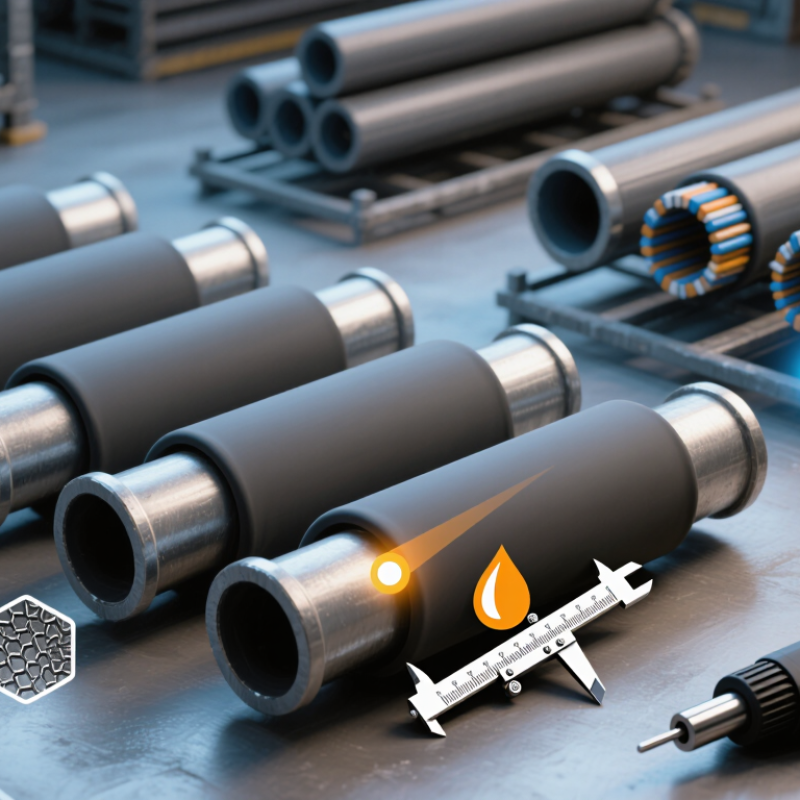
Heat shrink sleeves for pipes are polymer jackets that contract when heated. Many include a hot-melt adhesive layer. The adhesive fills small surface gaps around joints, creating a water-resistant seal. They are commonly used on steel, ductile iron, and polyethylene pipes. Applications include buried pipelines, district heating, water networks, sewage systems, and cable conduits. Field technicians use them around welds, couplings, flanges, and repair sections. A properly installed sleeve should bond evenly, without scorching, wrinkles, or trapped air. It is not magic. Surface preparation still controls performance.
Corrosion protection remains a major engineering concern. AMPP’s IMPACT study estimated global corrosion costs at about 3.4% of worldwide GDP. This helps explain demand for reliable joint protection in infrastructure projects. A 2024 MarketsandMarkets analysis also identifies growing heat-shrinkable material demand in utilities, energy, and industrial applications. Buyers should examine sleeve recovery ratio, adhesive thickness, operating temperature, and resistance to soil chemicals. They should also request test evidence related to ISO 21809-3 or relevant project specifications. Experienced suppliers can provide installation records, batch traceability, and heating guidance. Field reality differs. A sleeve that performs well in a factory trial may fail after poor cleaning, uneven heating, or incorrect overlap. Supplier evaluation should include technical support, inspection procedures, production capacity, and delivery reliability across regions.
Choosing a pipe sleeve starts with the service environment, not the supplier’s catalog. Buried pipelines need resistance to moisture, soil stress, chemicals, and temperature cycling. Cross-linked polyolefin is widely used because it recovers evenly and maintains mechanical strength. The inner adhesive should soften fully and fill small surface gaps. A thick adhesive layer helps, but it cannot repair poor surface preparation. I have seen excellent sleeves fail because dust remained beneath the coating. It was avoidable.
For steel pipelines, ISO 21809-3 offers useful guidance for field-joint coating performance. EN 12068 also addresses shrinkable materials used with cathodic protection. Project specifications may request tests for peel strength, shear resistance, water absorption, impact resistance, and cathodic disbondment. ASTM G8 or ASTM G95 may support corrosion-related testing, depending on the application. Check the exact edition and testing method. A certificate alone is not enough.
Reliable suppliers should provide material composition, recovery temperature, adhesive softening range, storage limits, and installation instructions. Ask for test reports from independent laboratories when the pipeline carries critical fluids. During inspection, verify preheating temperature, overlap length, and adhesive flow around the joint. Uneven heating is common. So is rushed cleaning. A sleeve may look smooth while bonding poorly underneath. I would also compare field support, batch traceability, and replacement procedures, not just unit price. Supplier rankings change; verified performance matters more.
Top Heat Shrink Sleeves for Pipes Suppliers Worldwide?
Evaluating global heat shrink sleeve suppliers requires more than comparing prices. Check their experience with your pipe material, coating type, diameter range, and installation environment. A supplier should provide technical data for shrink temperature, adhesive flow, sleeve recovery, and recommended overlap. Ask for batch traceability and inspection records, not only a polished catalogue.
Request samples that match your project. Test one sleeve on a prepared pipe section, then inspect bonding after cooling. Look for smooth adhesion, trapped air, edge lifting, or uneven shrinkage. Installation guidance should explain surface cleaning, preheating, flame movement, and cooling time. Clear instructions reveal practical knowledge. Vague instructions create expensive site problems.
Global reliability also depends on communication and logistics. Confirm production capacity, packaging protection, lead times, export documents, and replacement procedures before placing an order. Independent test reports can support confidence, but their scope matters. A report for one sleeve size may not represent every size. I would also ask for references from comparable pipeline conditions. A perfect presentation is not proof. Sometimes, a smaller supplier answers technical questions more carefully, although its documentation may need closer review. That uncertainty deserves attention.
Global sourcing is shifting toward regions with strong polymer production, pipe infrastructure, and certified installation capacity. A 2024 MarketsandMarkets assessment valued the heat-shrink tubing market at about USD 2.1 billion in 2023, with growth toward 2028. East Asia remains important for volume and adhesive-lined sleeves. European suppliers commonly emphasize flame performance, traceability, and low-smoke formulations. North American producers often focus on utility repair kits and rugged field packaging. Regional strength is not proof of quality.
For buried steel and ductile-iron pipes, corrosion-sealing sleeves need compatible adhesive, controlled shrink temperature, and verified overlap. Suppliers serving water, energy, and district-heating projects often specialize in thick-wall systems. Electrical and communication conduits usually need thinner, faster-shrinking insulation sleeves. A 2023 Grand View Research report projected continued demand from infrastructure renewal and cable protection. Check test standards, batch records, and installation instructions before comparing price. Small details matter.
On site, clean pipe surfaces, dry the joint, and mark sleeve placement before heating. Uneven flame movement can leave glossy adhesive on one side and weak bonding on the other. Infrared inspection helps, but it cannot replace a destructive sample test. One limitation remains: published market reports combine very different sleeve types. Therefore, regional rankings can mislead buyers seeking one exact product. A neat spreadsheet does not replace a dirty site trial.
Top Heat Shrink Sleeves for Pipes Suppliers Worldwide?
Sourcing begins with evidence, not attractive catalogues. Ask suppliers for batch traceability, material data sheets, storage limits, and independent test results. ISO 21809-3 provides relevant requirements for field-joint coating systems. EN 12068 also supports evaluation of flexible protective coatings. NACE’s IMPACT study estimated global corrosion costs at US$2.5 trillion annually, equal to about 3.4% of global GDP. That figure shows why low prices can create expensive failures.
Installation quality depends heavily on site discipline. Remove rust, moisture, oil, and sharp edges before heating. Measure surface temperature with a calibrated device. Follow the sleeve’s specified heating pattern and overlap. The adhesive should soften evenly, without burning or leaving cold areas. After cooling, inspect for wrinkles, lifted edges, voids, and incomplete bonding. Holiday detection can identify pinholes, but it cannot replace visual inspection or adhesion checks. I have seen sleeves pass a quick test and fail months later because surface preparation was rushed.
Tips: Select suppliers with regional technical support, documented factory controls, and clear replacement policies. Request sample sleeves for a controlled trial. Compare shrink recovery, adhesive flow, peel strength, and resistance to water immersion. Keep installation photographs and batch numbers. Small details matter. One practical weakness remains: field conditions rarely match laboratory tests, so project-specific verification is still necessary.
Global supplier-selection matrix for heat-shrink sleeves used on buried pipelines, field joints, bends, fittings, and repair applications. Technical values are typical industry ranges and must be confirmed against the project specification and product data sheet.
| Supplier Profile / Market | Typical Application | Common Sleeve Construction | Typical Shrink Ratio | Typical Service Temperature | Key Sourcing Requirements | Installation Controls | Quality Verification |
|---|---|---|---|---|---|---|---|
| Pipeline-coating specialists in Europe | Factory-applied or field-applied corrosion protection for steel pipe girth welds and field joints. | Cross-linked polyolefin backing with a heat-activated adhesive layer; some systems include a sealant or mastic component. | 3:1 or 4:1 | Commonly approximately −40°C to +80°C, depending on adhesive and coating system. | Request compliance with the project coating specification, ISO 21809-3 where applicable, installation instructions, and batch traceability. | Prepare a clean, dry surface; preheat the steel to the specified temperature; heat evenly from the center toward the edges; confirm adhesive flow and edge sealing. | Check surface preparation, preheat records, sleeve overlap, adhesive flow, holiday detection, peel adhesion, and cathodic-disbondment performance when specified. |
| Industrial sleeve manufacturers in North America | Pipeline joints, pipe repairs, fittings, bends, and external corrosion protection in utility and energy projects. | Radiation-cross-linked polyolefin or modified polyolefin backing with hot-melt adhesive or compatible sealant. | 2:1, 3:1, or 4:1 | Often approximately −40°C to +85°C; higher-temperature designs require specific qualification. | Verify dimensional range, recovery temperature, adhesive compatibility with the existing pipe coating, packaging condition, and technical support availability. | Remove contaminants and sharp edges; use the specified abrasive profile; maintain recommended preheat; avoid flame concentration that can damage the backing or coating. | Verify incoming dimensions, adhesive softening behavior, visual continuity, electrical insulation, peel strength, and resistance to water immersion where required. |
| Large-volume manufacturers in East Asia | High-volume procurement for water, gas, district heating, infrastructure, and general buried-pipe projects. | Polyolefin backing with hot-melt adhesive; product ranges may include standard, high-shrink, and narrow-width formats. | 3:1 or 4:1 | Typically approximately −30°C to +80°C, subject to the formulation and qualification method. | Confirm production capacity, inspection plans, material declarations, sample approval, export packaging, and lot-level certificates before purchase. | Use calibrated thermometers or temperature crayons where permitted; keep sleeves dry and protected from ultraviolet exposure; follow the supplier’s heating sequence. | Audit raw-material controls, dimensional tolerances, gel content or cross-linking evidence, peel adhesion, shrink recovery, and batch-to-batch consistency. |
| Specialty manufacturers in Central and Western Europe | District heating, high-integrity pipeline joints, complex fittings, and projects requiring documented European conformity. | Cross-linked polyolefin or multilayer backing with engineered adhesive systems selected for the pipe coating. | 3:1 or 4:1 | Commonly approximately −40°C to +100°C for qualified systems; confirm the exact operating limit. | Review conformity documentation, welding-joint compatibility, long-term aging data, installation training, and project-specific qualification reports. | Control abrasive cleaning, substrate temperature, preheating, sleeve positioning, overlap length, adhesive bead formation, and cooling before backfilling. | Use documented inspection and test plans covering holiday testing, adhesion, impact resistance, indentation, water absorption, and thermal aging. |
| Regional manufacturers in the Middle East | Above-ground and buried pipelines exposed to high ambient temperatures, sand, ultraviolet radiation, and demanding logistics. | UV-stabilized polyolefin backing with heat-activated adhesive or mastic for field-joint protection. | 3:1 or 4:1 | Frequently specified for approximately −20°C to +80°C; desert exposure and installation temperature require separate assessment. | Check storage-life limits, UV resistance, high-temperature handling, compatibility with fusion-bonded epoxy or three-layer polyolefin coatings, and delivery protection. | Prevent sand contamination; use sheltered preparation areas where possible; monitor steel and ambient temperatures; ensure full adhesive wet-out at the overlap. | Inspect packaging and storage records, conduct visual and holiday checks, verify adhesion after cooling, and document repair of coating defects. |
| Manufacturers serving South Asia and Southeast Asia | Water pipelines, gas distribution, infrastructure projects, and general-purpose pipe repair applications. | Polyolefin heat-shrink sleeve with hot-melt adhesive; options may include closure patches, end seals, and repair wraps. | 2:1 or 3:1 | Often approximately −20°C to +70°C; humid and tropical storage conditions must be considered. | Confirm moisture-resistant packaging, warehouse storage requirements, local installation support, product shelf life, and coating compatibility. | Keep the substrate dry; remove rust, oil, and dust; use the specified surface profile; heat progressively to prevent trapped moisture and air channels. | Verify sleeve width, recovery, adhesive coverage, lap-joint integrity, electrical continuity of the protective coating, and resistance to moisture exposure. |
| Manufacturers serving Latin America | Oil, gas, mining, water, and infrastructure pipelines installed in coastal, tropical, high-altitude, or abrasive environments. | Cross-linked polyolefin or modified polyolefin backing with adhesive selected for the existing anticorrosion coating. | 3:1 or 4:1 | Usually approximately −30°C to +80°C; altitude, humidity, and soil conditions may affect project qualification. | Request Spanish or Portuguese installation documentation where needed, regional technical support, import documentation, and product qualification evidence. | Adapt heating and surface-preparation procedures to wind, humidity, altitude, and site temperature; protect the joint from rain and dust during installation. | Review installer qualifications, record environmental conditions, inspect overlap and edge sealing, perform holiday testing, and retain traceability records. |
| Repair and maintenance suppliers worldwide | Localized coating repairs, emergency maintenance, small-diameter pipes, valves, flanges, and irregular geometries. | Repair sleeves, wraparound sleeves, adhesive-lined tubing, or heat-shrinkable tapes with compatible sealants. | 2:1 to 4:1 | Commonly approximately −20°C to +80°C; the service limit depends strongly on the repair adhesive and substrate. | Confirm maximum repair area, geometry limits, compatibility with the existing coating, shelf life, field tools, and emergency delivery capability. | Feather coating edges, remove corrosion products, round sharp transitions, apply primer if specified, and maintain uniform heating around complex shapes. | Check complete encapsulation, absence of wrinkles or voids, edge adhesion, electrical insulation, and resistance to mechanical damage during handling. |
| Engineering-led project suppliers worldwide | Major transmission pipelines and projects requiring design review, qualification testing, training, and installation supervision. | Project-specific sleeve system selected for the pipe coating, operating temperature, soil environment, cathodic-protection system, and joint geometry. | Project-specific | Determined by the complete system qualification rather than the backing material alone. | Require a technical submittal, approved drawings, method statement, inspection and test plan, material safety information, and complete traceability. | Use qualified applicators; calibrate heating equipment; document surface profile, preheat temperature, sleeve overlap, cooling time, and final inspection. | Combine factory testing, site acceptance testing, holiday detection, adhesion testing, dimensional inspection, nonconformance control, and final dossier review. |
They are polymer jackets that contract when heated. Many contain hot-melt adhesive. The adhesive fills small gaps around joints.
They protect welds, couplings, flanges, and repair sections. Common settings include buried pipelines, heating networks, water systems, sewage lines, and cable conduits.
They are commonly suitable for steel, ductile iron, and polyethylene pipes. Always confirm compatibility with the pipe coating and operating conditions.
Check diameter range, recovery ratio, adhesive thickness, temperature limits, and soil-chemical resistance. Request batch traceability and inspection records.
Use a sample on a prepared pipe section. After cooling, inspect bonding, edge lifting, wrinkles, trapped air, and uneven shrinkage.
Remove rust, moisture, oil, and sharp edges. A clean, dry surface matters more than an attractive catalogue.
Follow the specified heating pattern and overlap. Move the flame evenly. Avoid scorching, cold areas, and trapped air.
Check smooth adhesion, lifted edges, voids, wrinkles, and incomplete bonding. Holiday detection may find pinholes, but visual inspection remains necessary.
Field conditions rarely match laboratory tests. Installation photographs, batch numbers, heating guidance, and replacement procedures support later review.
Possibly, but price alone proves little. Poor cleaning or uneven heating can cause failure months later. That risk deserves attention.
Heat Shrink Sleeves For Pipes are protective sealing systems designed to insulate, waterproof, and shield pipe joints, connections, and repaired sections from corrosion, moisture, chemicals, abrasion, and mechanical stress. Common applications include oil and gas pipelines, water networks, district heating systems, industrial infrastructure, and underground utilities. Their performance depends on material selection, such as cross-linked polyolefin, adhesive layers, and corrosion-resistant coatings, as well as compliance with relevant pressure, temperature, insulation, and durability requirements.
When evaluating global suppliers, buyers should review product specifications, manufacturing consistency, testing procedures, technical support, customization capabilities, and quality certifications. Different supplier regions may specialize in particular sleeve sizes, adhesive technologies, or demanding environmental applications. Successful sourcing also requires confirming storage conditions, installation tools, surface preparation, heating procedures, and operator training. Before acceptance, purchasers should verify dimensions, adhesive bonding, sealing continuity, and resistance to the intended operating environment through documented inspections and testing.

CYCT