Choosing a supplier for 3lpp Heat Shrinkable Tape is not simply a price comparison. The material must seal pipeline joints, resist moisture, and bond reliably to the existing coating. A neat product sheet helps, but it cannot replace verified test results.
The International Energy Agency’s Gas 2024 report projected global gas demand growth of about 2.5% in 2024, highlighting continued pressure on energy infrastructure. That forecast is not a direct measure of coating demand. Still, it helps explain why durable pipeline protection remains an important purchasing consideration. For technical context, ISO 21809-3:2016 covers field-joint coatings for buried or submerged pipelines, including performance requirements and testing approaches.
This guide compares three internationally active suppliers through practical criteria: documented product specifications, substrate compatibility, application temperature, installation guidance, and quality-control evidence. Buyers should check peel strength, backing thickness, shrink behavior, and service-temperature limits against the actual project conditions. Request current technical data sheets and independent test documentation, then confirm details with the supplier. Small differences matter.
A ranking has limits. Product performance depends on surface preparation, heating practice, and site conditions, so supplier claims alone are not enough. Treat the comparison as a shortlist, not a final engineering decision. One overlooked detail can matter.
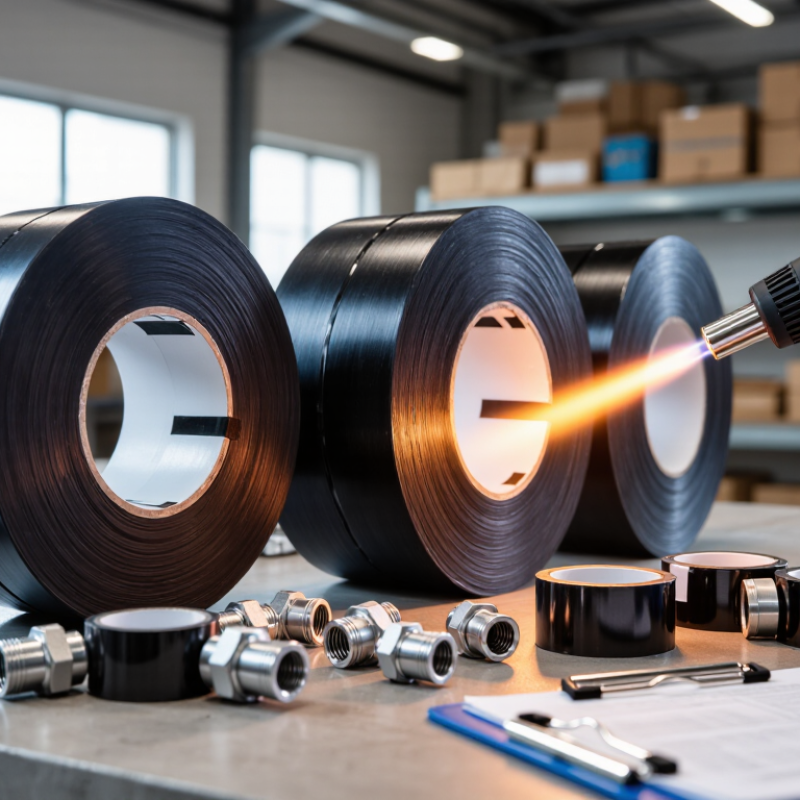
3LPP heat-shrinkable tape is a field-applied wrapping material used to protect pipeline joints and fittings. The term “3LPP” refers to a three-layer polypropylene coating system: an epoxy primer, an adhesive layer, and a polypropylene outer layer. A shrinkable tape or sleeve can help cover areas where the factory coating ends, such as a welded joint.
The tape usually combines a heat-responsive backing with an adhesive layer. When heated according to its product instructions, the backing contracts around the pipe and presses the adhesive against the prepared surface. This close fit helps limit gaps where moisture could reach the steel. Surface cleaning, dry conditions, correct overlap, and controlled heating all affect the result. Small installation errors matter.
One point can be confusing: “3LPP tape” does not always mean the tape itself has the same three layers as a factory-applied coating. Product construction and compatibility vary. Check technical data for the substrate, operating temperature range, overlap requirements, and compatibility with the existing coating. The terminology is not always consistent, so confirm what the supplier means before comparing products. A careful field inspection is still useful; paperwork alone cannot show whether every edge bonded properly.
3LPP means a three-layer polypropylene coating: epoxy primer, adhesive, and a tough polypropylene outer layer. At a pipeline girth weld, that factory coating ends, leaving a narrow joint to protect. Heat-shrinkable tape bridges this gap. Its backing is made to contract when warmed, while its adhesive softens and bonds to the prepared steel and adjacent coating. The recovered backing forms a close-fitting outer barrier. It is not magic.
Installation details matter. The joint must be clean and dry, and the tape needs the specified overlap. An installer applies steady, moving heat so the backing recovers without scorching the adhesive or damaging nearby coating.
Too little heat can leave loose edges; too much can create defects that are hard to spot later. Exact temperature and overlap depend on the product design, so field procedures should follow its technical data and applicable coating specifications.
One weak spot remains: poor surface preparation cannot be fixed by shrinking the tape tighter.
The stakes are real. NACE International’s IMPACT study estimated global corrosion costs at US$2.5 trillion, or 3.4% of global GDP, based on 2013 data. That figure covers many industries, not pipeline joints alone, but it shows why inspection and careful application matter.
After cooling, checks for edge lift, wrinkles, and full adhesion help catch problems before burial.
When comparing top 3LPP heat shrinkable tape suppliers worldwide, buyers should examine application evidence, not only laboratory figures. These tapes commonly protect pipeline field joints, bends, fittings, and repair areas against moisture and soil corrosion. They are useful where factory-applied coatings need reliable continuity after welding or handling.
Field joint coating is demanding. The tape must bond firmly to the prepared steel and adjacent polypropylene coating. It should shrink evenly around weld profiles without leaving channels or wrinkles. A practical system needs suitable shrink recovery, high lap-shear strength, and strong resistance to cathodic disbondment. Moisture resistance matters underground. UV stability matters above ground. Temperature ratings should match both service conditions and installation heating.
Installation details often decide performance. The steel surface normally requires controlled cleaning, dryness, and preheating. Technicians must monitor temperature, overlap, torch movement, and adhesive flow. A small cold spot can create a hidden path for water. That failure may appear months later. Not every supplier reports test methods with equal clarity, so technical data should be checked against recognized pipeline coating standards and project specifications.
Real sites are less predictable. Wind, dust, uneven weld beads, and rushed preparation can reduce adhesion. This is where supplier training, batch traceability, and responsive technical support become important. A tape may perform well in testing yet disappoint when the installation window is narrow. That uncomfortable gap deserves attention.
Evaluating worldwide 3LPP tape suppliers starts with technical evidence, not polished brochures. Ask for recent test reports, batch records, and field references from comparable pipeline projects. The supplier should explain adhesive chemistry, polypropylene grade, primer compatibility, application temperature, and peel strength. These details reveal practical experience.
Use applicable ISO 21809 requirements and project specifications as the baseline. Request independent testing for shear resistance, cathodic disbondment, water absorption, impact strength, and thermal ageing. The NACE IMPACT study estimated global corrosion costs at US$2.5 trillion, or 3.4% of global GDP. Small coating failures can create expensive delays. Therefore, quality consistency deserves more attention than the lowest quotation.
Review production capacity, traceability, and export reliability. A capable supplier should provide lot numbers, inspection plans, calibration records, and clear storage instructions. PlasticsEurope reported global plastics production at about 400 million tonnes in 2022, highlighting the scale of polymer supply chains. However, volume alone proves little. Ask how recycled content, waste handling, and material declarations are controlled. Sustainability claims need documents.
Check delivery performance across climates. Humidity, dust, and long sea transport can affect tape condition. I would also compare at least three suppliers using the same test protocol. That comparison may still be imperfect. Real installation feedback often exposes weaknesses that laboratory data misses.
This weighted evaluation model highlights the main factors used when comparing worldwide 3LPP heat-shrinkable tape suppliers. Technical compliance and independent qualification testing receive the highest weighting because they directly influence coating performance, corrosion protection, and long-term pipeline reliability. The percentages represent evaluation priorities, not market share or company rankings.
Three Leading 3LPP Heat-Shrinkable Tape Suppliers Worldwide
Three supplier profiles currently stand out in the global 3LPP heat-shrinkable tape market. A European integrated producer typically offers polypropylene backing, hot-melt adhesive, and application guidance from one technical team. A North American specialist often focuses on engineered tape widths, controlled shrink ratios, and project-specific qualification. An Asian high-volume manufacturer usually competes through stable production capacity, shorter lead times, and ISO 9001 quality systems.
Market context matters. MarketsandMarkets estimated the global pipeline coatings market at approximately USD 5.5 billion in 2023, with projections reaching USD 7.1 billion by 2028. This broader category includes 3LPP systems, but not tape alone. Grand View Research also identifies infrastructure renewal and offshore pipeline investment as major demand drivers. These trends support continued interest in heat-shrinkable joint protection.
Technical evidence should guide purchasing. Ask for peel strength, lap-shear results, shrink recovery, cathodic disbondment data, and service-temperature limits. Request batch traceability, application records, and independent test reports. A supplier with strong laboratory data may still perform poorly if field training is weak. That is easy to overlook. Public market reports are not perfectly comparable, and supplier rankings remain partly subjective. Climate, pipe diameter, installation speed, and coating compatibility can change the preferred choice.
It is a field-applied wrapping material for pipeline joints, bends, fittings, and repair areas. It helps restore coating continuity.
It commonly describes an epoxy primer, adhesive layer, and polypropylene outer layer. The tape itself may not contain all three layers.
Heat makes the backing contract around the pipe. The adhesive presses against the prepared surface and helps block moisture paths.
It protects welded field joints, bends, fittings, and damaged coating sections. It is useful where factory coating ends.
Workers should clean the steel, remove contamination, keep it dry, and apply controlled preheating. Dust matters. Small particles can weaken bonding.
Correct overlap, torch movement, heating temperature, and adhesive flow are important. A cold spot may leave a hidden water channel.
Request peel strength, lap-shear strength, shrink recovery, cathodic disbondment, and temperature limits. Batch records and independent test reports also help.
No. Wind, dust, uneven weld beads, and rushed preparation can change the result. Paperwork is not enough.
Compare application records, training, technical support, production consistency, and coating compatibility. A lower price may create higher installation risk.
Not always. Confirm the layer structure, substrate compatibility, overlap rules, and operating range before purchasing. A careful site inspection still matters.
3lpp Heat Shrinkable Tape is a specialized multilayer material used to protect and seal joints, connections, and components that require reliable insulation and environmental resistance. Its three-layer structure typically combines a heat-shrinkable polymer backing with adhesive or sealing layers. When heated, the tape contracts tightly around the target surface, creating a durable barrier against moisture, corrosion, abrasion, and mechanical stress. Its performance depends on controlled shrinkage, strong adhesion, flexibility, temperature resistance, and long-term stability.
This article explains the main applications and performance requirements of 3lpp Heat Shrinkable Tape, including cable protection, pipeline joints, industrial equipment, and infrastructure maintenance. It also outlines how to evaluate worldwide suppliers by examining material quality, manufacturing consistency, technical support, customization options, testing capabilities, certifications, delivery reliability, and overall value. Finally, it introduces three leading supplier categories that stand out for dependable production, broad application expertise, and the ability to meet demanding project specifications without focusing on any specific brand.

CYCT