China has become a major sourcing hub for packaging films, labels, and converting equipment. This article introduces ten notable Chinese manufacturers of Pp Heat Shrink Sleeve products. These companies serve beverage, food, household, cosmetic, and industrial packaging markets. Their capabilities may include film extrusion, gravure printing, slitting, seaming, and quality inspection.
Choosing a supplier requires more than comparing attractive catalogs. Production experience matters. So do stable raw materials, accurate printing, clean edges, and consistent shrinking performance. A reliable manufacturer should explain its resin selection, thickness tolerance, shrink ratio, ink system, and inspection process. Samples should be tested on the buyer’s actual containers. Small differences can affect sleeve alignment, tunnel performance, and shelf appearance.
This guide considers manufacturing capacity, technical communication, customization, export experience, and documented quality practices. It also recognizes practical limitations. Public information may be incomplete. Supplier claims still require verification through samples, factory audits, and clear contracts. No ranking can capture every strength. That is worth remembering.
Some projects need high-speed application. Others need strong color reproduction or recyclable material options. The best choice depends on equipment, container shape, order volume, and regional requirements. Buyers should request technical data before placing large orders. They should also confirm packaging protection during transport and after storage. A good sleeve looks attractive, but it must perform reliably. That is the real test.
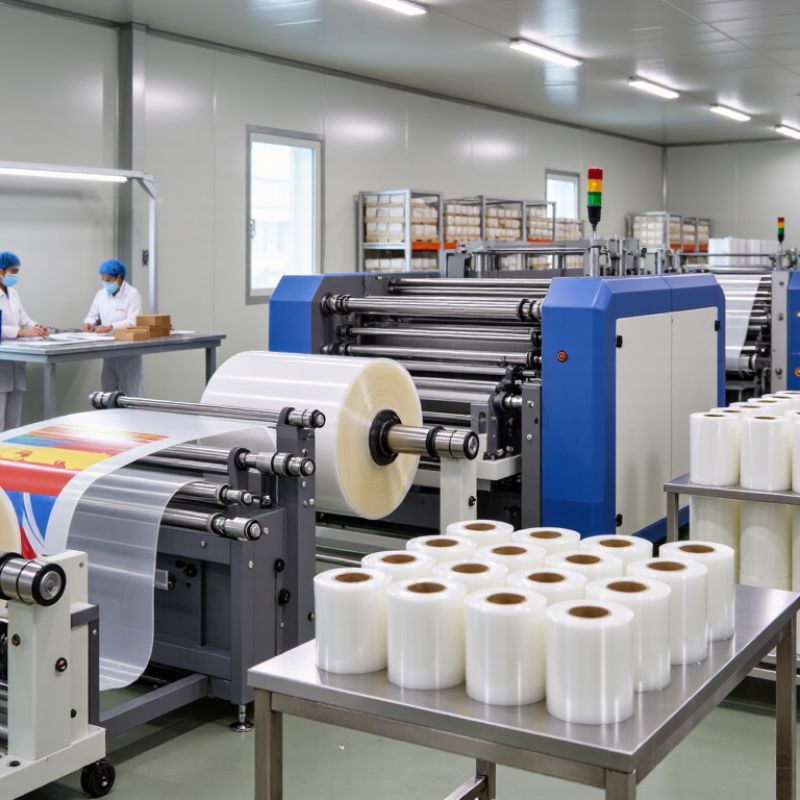
PP Heat Shrink Sleeve Basics: 0.90–0.91 g/cm³ Density and 30–50% Shrinkage
China Top 10 PP Heat Shrink Sleeve Manufacturers
PP heat shrink sleeves are valued for their light weight, clean appearance, and practical label coverage. Their typical density is 0.90–0.91 g/cm³. This range helps reduce material weight without making the sleeve feel fragile. Buyers should verify density through a technical data sheet or laboratory report.
Shrinkage commonly reaches 30–50%, depending on film orientation, temperature, and processing speed. The machine direction and transverse direction may shrink differently. That difference affects label fit around tapered bottles.
In production, a stable heat tunnel matters as much as the film itself. Uneven airflow can create wrinkles, loose panels, or distorted graphics. Skilled manufacturers normally test sleeve samples on the customer’s actual container. They may adjust film gauge, seam strength, and shrink temperature.
A neat sample can still fail during high-speed filling. Real performance can differ. This is where careful evaluation matters.
Buyers should compare test records, dimensional accuracy, and batch consistency before selecting among leading Chinese manufacturers.
Tips:
Ask for density, shrinkage curves, and recommended tunnel settings. Check both shrink directions. Test printed sleeves on filled containers, not empty ones. Leave enough overlap around handles and shoulders. Also inspect the seam after heating. Small defects often appear there first.
China’s Top 10 PP Heat Shrink Sleeve Manufacturers by Capacity and Technology
China Top 10 PP Heat Shrink Sleeve Manufacturers
China’s Top 10 PP Heat Shrink Sleeve Manufacturers by Capacity and Technology
China’s top ten PP heat shrink sleeve manufacturers are best compared by capacity and technology, not advertising claims. Capacity should reflect verified monthly output, active extrusion lines, and production uptime. Strong factories often operate multiple PP film lines, automated slitting equipment, and high-speed printing systems. Some report impressive annual figures. Yet idle equipment can distort the picture. A site visit matters.
Technology separates capable suppliers from merely large ones. Leading producers control film thickness, shrink percentage, ink adhesion, and seam strength through documented testing. Common checks include caliper mapping, heat-tunnel trials, tensile testing, and barcode readability. Advanced plants use inline cameras to detect pinholes, color shifts, and registration errors. Some offer recyclable PP structures and lower-solvent printing options. These features support stable packaging performance, though recycling claims require local verification.
The top ten should also be assessed through delivery records, complaint handling, and technical support. A reliable manufacturer shares trial data before mass production and keeps resin batches traceable. It can adjust sleeve diameter for uneven containers without creating wrinkles. Capacity alone does not guarantee this. Rankings remain imperfect because factories measure output differently, while seasonal demand changes availability. Buyers should compare audited data, sample rolls, and real production-line tests. Small defects become expensive quickly.
Manufacturer Profiles: Film Thickness, Shrink Ratio, and 120–150°C Activation Range
China Top 10 PP Heat Shrink Sleeve Manufacturers
Manufacturer Profiles: Film Thickness, Shrink Ratio, and 120–150°C Activation Range
A credible manufacturer profile should show measurable film data, not only production capacity. Many Chinese PP sleeve producers offer films between 40 and 60 microns. Typical transverse shrink ratios range from 1.5:1 to 2:1, depending on the resin and orientation process. Activation commonly begins near 120°C and reaches stable performance around 150°C. These figures require confirmation through actual line trials.
Smithers’ packaging market analysis identifies continued growth in shrink-sleeve applications, driven by full-body decoration and recyclable packaging development. Mordor Intelligence estimates the global shrink-sleeve labels market could grow at over 7% annually through 2029. Such growth increases supplier choice, but it also increases comparison risks. A “top ten” list should examine haze, coefficient of friction, seal strength, ink adhesion, and shrink uniformity. A polished datasheet can still hide inconsistent batches. I have seen attractive samples wrinkle around sharp shoulders after tunnel heating.
Tips: Request COA records and three recent production samples. Test 120°C, 135°C, and 150°C separately. Record tunnel speed, dwell time, and bottle geometry. Do not compare shrink ratios without checking machine direction and transverse direction. For reliable sourcing, ask manufacturers to reference ASTM D2732 shrinkage testing, while confirming the final package under real filling conditions.
China Top 10 PP Heat Shrink Sleeve Manufacturers - Manufacturer Profiles: Film Thickness, Shrink Ratio, and 120–150°C Activation Range
| Profile |
Film Structure |
Film Thickness |
Typical Shrink Ratio
(MD × TD) |
Activation Range |
Recommended Sleeve Height |
Typical Applications |
Printing Compatibility |
| Manufacturer Profile 01 |
Biaxially oriented PP, clear gloss |
40–50 μm |
1.5:1 × 2.0:1 |
120–140°C |
80–220 mm |
Beverage bottles, personal-care containers |
Gravure, flexographic |
| Manufacturer Profile 02 |
Biaxially oriented PP, matte finish |
45–55 μm |
1.6:1 × 2.0:1 |
125–145°C |
100–250 mm |
Food jars, household products, promotional packs |
Gravure, digital |
| Manufacturer Profile 03 |
Pearlescent PP, high-opacity finish |
50–60 μm |
1.5:1 × 1.8:1 |
130–150°C |
90–230 mm |
Dairy containers, beverage packaging, cosmetics |
Gravure, flexographic |
| Manufacturer Profile 04 |
White opaque PP, reverse-print grade |
45–60 μm |
1.4:1 × 2.0:1 |
125–145°C |
100–280 mm |
Nutritional products, cleaning products, food packaging |
Gravure, flexographic |
| Manufacturer Profile 05 |
Transparent PP, low-haze grade |
35–45 μm |
1.5:1 × 1.9:1 |
120–135°C |
60–180 mm |
Small bottles, sample-size packaging, premium labels |
Flexographic, digital |
| Manufacturer Profile 06 |
Biaxially oriented PP, high-stiffness grade |
50–65 μm |
1.6:1 × 1.8:1 |
130–150°C |
120–300 mm |
Large beverage containers, industrial and chemical packaging |
Gravure |
| Manufacturer Profile 07 |
Clear PP, enhanced ink-adhesion grade |
40–55 μm |
1.5:1 × 2.0:1 |
125–140°C |
80–240 mm |
Health-care bottles, toiletries, food and drink packaging |
Gravure, flexographic, digital |
| Manufacturer Profile 08 |
Metalized PP, light-barrier grade |
45–60 μm |
1.4:1 × 1.8:1 |
130–150°C |
90–220 mm |
Light-sensitive products, specialty beverages, premium packaging |
Gravure |
| Manufacturer Profile 09 |
Recyclable mono-material PP sleeve film |
40–55 μm |
1.5:1 × 1.9:1 |
120–145°C |
80–250 mm |
Recycling-oriented beverage and household packaging |
Flexographic, digital |
| Manufacturer Profile 10 |
High-clarity PP, premium label grade |
35–50 μm |
1.5:1 × 2.0:1 |
125–145°C |
60–200 mm |
Premium cosmetics, personal-care and specialty food products |
Gravure, flexographic, digital |
Technical note: The specifications shown are representative PP heat-shrink sleeve film ranges used in commercial packaging. Actual performance varies with resin formulation, orientation process, sleeve geometry, container shape, tunnel temperature, dwell time, and line speed.
Quality Comparison: FDA/GB Compliance, Print Accuracy, and Seal Performance
When comparing China’s top ten PP heat shrink sleeve manufacturers, compliance should be checked beyond marketing claims. A credible supplier provides material declarations, migration test reports, and batch traceability for FDA-related food-contact requirements and applicable GB standards. Documents must match the resin, ink, adhesive, and production site. They should also show test dates. Not just logos.
Print accuracy becomes visible on the filling line. Inspectors should compare digital artwork with production samples, checking barcode edges, color density, registration, and small text under magnification. A practical tolerance must be agreed before printing, because “accurate” has different meanings across factories. I prefer measured ΔE color data and a documented registration limit, not visual approval alone. Still, controlled print runs can reveal slight distortion after shrinking. That weakness deserves testing.
Seal performance needs heat, pressure, and time data from the intended packaging machine. Samples should run through the actual tunnel, then receive peel, leak, and drop checks. A sleeve can look smooth yet split at a hot corner. This is where supplier experience matters: film thickness, shrink ratio, sealing temperature, and overlap must work together. In one review, we accepted a strong laboratory result too quickly; line-speed variation later exposed unstable seals. The lesson is uncomfortable. Factory audits should include retained samples, machine settings, and repeat tests from different lots.
China Top 10 PP Heat Shrink Sleeve Manufacturers — Quality Benchmark
Reference comparison based on food-contact compliance documentation, print registration accuracy, and seal-strength targets. FDA and GB compliance are shown as documentation checkpoints; print and seal values reflect commonly specified technical targets and should be verified through supplier testing.
Key references include FDA 21 CFR 177.1520 for polypropylene food-contact applications, GB 4806.7 for food-contact plastic materials and articles, print-registration tolerances commonly specified around ±0.15 mm, and seal-strength testing based on ASTM F88/F88M. Actual results depend on resin grade, film structure, ink system, sealing temperature, and production controls.
Selection Guide: MOQ, Production Lead Time, Recycling Data, and Export Reach
China Top 10 PP Heat Shrink Sleeve Manufacturers
When comparing China’s top 10 PP heat shrink sleeve manufacturers, start with MOQ, not catalog claims. Standard sizes may begin near 50,000 sleeves, while custom artwork often requires higher quantities. Ask whether the MOQ applies per design, color, or combined order. A small pilot run can reveal sealing problems before full production. It may cost more per sleeve, but it protects cash flow.
Production lead time should be separated into artwork approval, cylinder preparation, printing, and delivery. Many factories can quote 7–15 working days for repeat orders, while new cylinders may add another 5–10 days. Confirm the approval method, inspection points, and backup plan for rejected rolls. One overlooked detail is holiday capacity. A promised date can shift quickly.
Recycling data needs careful review. Request the PP grade, sleeve density, ink system, adhesive details, and laboratory test reports. Ask whether the sleeve separates during standard bottle recycling trials. A recyclable claim without test conditions is weak evidence. Export reach also matters: check shipment records by destination, packaging for humid routes, and experience with customs documents. A manufacturer serving several regions may understand port delays better, but export volume alone does not prove quality. Keep batch samples, packing photos, and signed specifications. Records are less glamorous, but they make supplier evaluation more reliable.
FAQS
Common thickness ranges from 40 to 60 microns. Thinner films may reduce material use. They can also wrinkle more easily.
Typical transverse shrink ratios range from 1.5:1 to 2:1. The resin and orientation process affect results. Check both machine and transverse directions.
Test separate runs at 120°C, 135°C, and 150°C. Activation often starts near 120°C. Stable performance may appear around 150°C. Actual tunnel trials matter more than brochures.
Compare artwork with production samples under magnification. Inspect barcode edges, small text, color density, and registration. Measured color differences are more useful than visual approval. Shrinking can slightly distort printed details.
Request material declarations, migration reports, and batch traceability records. Documents should match the resin, ink, adhesive, and production site. Check test dates carefully. Logos alone prove little.
Run samples through the intended tunnel and packaging machine. Record heat, pressure, dwell time, and line speed. Perform peel, leak, and drop checks afterward. A smooth sleeve may still split at a hot corner.
Standard orders may start near 50,000 sleeves. Custom artwork often requires higher quantities. Ask whether the minimum applies per design, color, or combined order. A pilot run costs more per sleeve, sometimes wisely.
Repeat orders may take about 7–15 working days. New cylinders can add another 5–10 days. Confirm artwork approval and inspection points. Holiday capacity can change promised dates quickly.
Request the PP grade, sleeve density, ink system, and adhesive details. Ask for laboratory reports with clear test conditions. Check whether the sleeve separates during bottle recycling trials. A recycling claim without conditions is weak evidence.
Conclusion
This guide introduces the essential characteristics of Pp Heat Shrink Sleeve materials, including their typical density of 0.90–0.91 g/cm³, shrinkage range of 30–50%, and activation temperature of approximately 120–150°C. It reviews China’s leading manufacturers by production capacity, processing technology, film thickness options, shrink ratios, and overall manufacturing consistency, helping buyers understand how different suppliers serve packaging, labeling, and product protection needs.
The comparison also examines FDA and GB compliance, print accuracy, sealing performance, recycling information, minimum order quantities, production lead times, and export capabilities. By evaluating these factors together, readers can identify suppliers that offer stable quality, efficient delivery, suitable customization, and dependable international service. The selection guidance is designed to support practical purchasing decisions while encouraging responsible material use and transparent product documentation.

 CYCT
CYCT